From FBI Agent to Faith-Based Counselor: What One Man Learned About Porn Addiction, Shame, and Healing
Guest post interview with Sean Brennan and Julia Daniels
Sean Brennan spent 35 years serving his country — 20 as an FBI agent, with additional years in the Army, including deployments to war zones with the 82nd Airborne Division, the 1st Ranger battalion, and the FBI. On the outside, he was the picture of discipline and achievement. On the inside, he was fighting a battle nobody knew about.
“Through recovery, I began to understand that the career I had was driven by the very same thing that drove my addiction,” Sean says. “I was constantly trying to prove myself, and I never arrived. No matter what I achieved in the Army or FBI, I never felt good enough.”
Today, Sean is a board-certified Christian counselor (AACC) and a certified Pastoral Sexual Addiction Professional (PSAP). He holds a master’s degree in pastoral counseling and has spent eight years leading recovery groups for men and couples. He works especially with veterans, first responders, law enforcement, and military personnel — the men whose cultures most reward discipline and stoicism.
This is what he has learned.
Table of Contents
- What Really Drives Porn Addiction: It’s Not What Most Men Think
- When and Why Men Finally Ask for Help With Porn Recovery
- Owning the Integrity Gap
- How to Know If It’s Addiction, Not Just a Struggle
- The Damage to Marriages — and Why Restoration Isn’t the Goal
- Inner Child Therapy: A Key to Understanding Why You Do What You Do
- Integrating Faith and Clinical Care — Why Both Matter
- What Sean Would Say to the Man Who Is Struggling Right Now
- Connect with Sean Brennan
What Really Drives Porn Addiction: It’s Not What Most Men Think
Sean didn’t grow up thinking he had a problem. Pornography was just “what guys did”. In the early 1990s, it wasn’t something anyone talked about. He got married, convinced himself it would stop, and was back in it within a year. He was caught by his wife three times. Three times he promised her sincerely that he would stop. And three times, he didn’t.
"I had no idea what I was facing. I thought: I'm a disciplined man. I've done all sorts of things. I can stop. That was pride. And pride is an even bigger barrier than shame."
Most people assume shame is the primary obstacle to seeking help. Sean argues it’s actually pride — the belief that willpower alone should be enough. For a man who served in special forces and spent decades in high-stakes federal law enforcement, admitting he needed help felt impossible. It is a belief that keeps countless men stuck.
There is a neurological reason willpower fails, Sean explains. Pornography addiction lives in the limbic system — the brain’s emotional and reward center — not in the prefrontal cortex where reasoning and decision-making happen. A man can know with absolute clarity that he wants to stop while his brain’s reward wiring continues to override that intention.
Understanding this distinction, Sean says, is one of the most liberating things a man in recovery can learn.
When and Why Men Finally Ask for Help With Porn Recovery
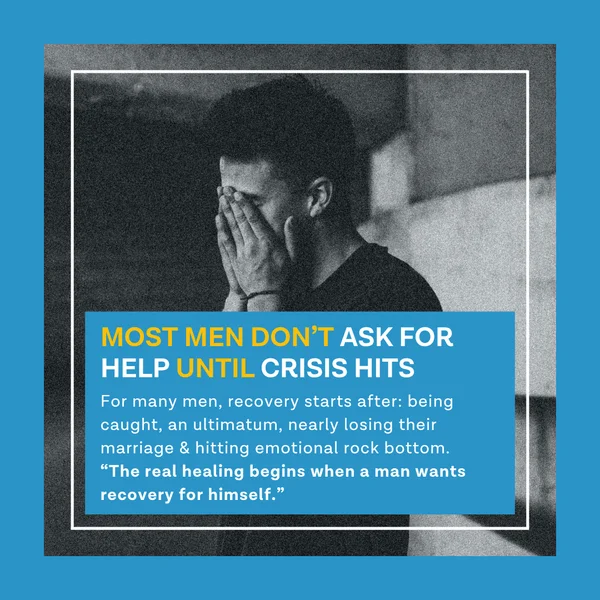
In Sean’s experience, most men do not seek help by their own choice. They seek help because they’ve been caught. A wife finds evidence. An ultimatum is delivered. And so a man shows up — not because he wants to, but because he has no other option.
"In the beginning, they're doing it under external pressure," Sean says. "The hope is that as they join a group and start seeing the potential of healing and change, it becomes something internal — something they want for themselves, for their relationship with God, and for their future. That's when the real healing begins."
Owning the Integrity Gap
For Christian men, the barrier is often even higher. Research from the Barna Group suggests that more than 50% of churchgoing men view pornography at least once a month. Yet the added layer of spiritual shame — the cognitive dissonance of believing one thing and doing another — makes Christian men less likely to seek help, not more. The thought of walking into a church and disclosing a pornography struggle feels unbearable.
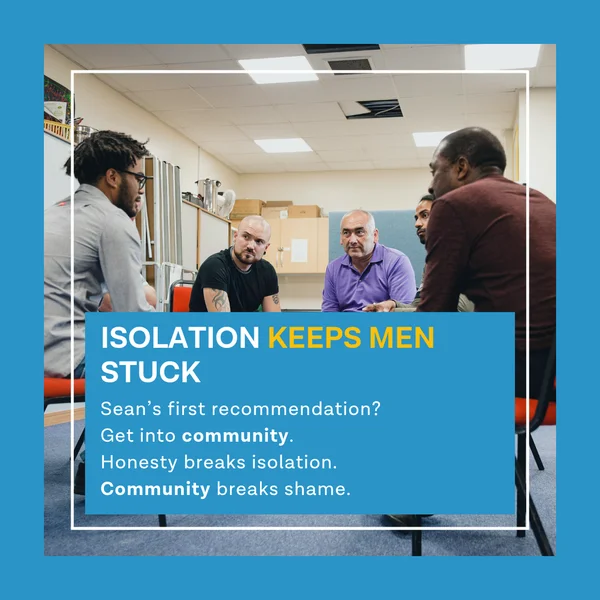
Sean’s first recommendation to every man he works with is the same: get into a group. Not just one-on-one counseling — a group of peers.
"You and I are not a community. I'm your counselor. You need to be in a room with other men. And every single time — literally the very first meeting — men walk out saying: 'That was amazing.'"
Being able to speak honestly in front of other men who understand, without judgment, is its own form of medicine.
How to Know If It’s Addiction, Not Just a Struggle
The phrase “unwanted sexual behavior” covers a wide spectrum, and many men aren’t sure whether what they’re experiencing is a normal struggle or something more serious. Sean outlines several clear markers:
- Loss of control is the clearest indicator. This includes repeated, sincere attempts to stop that end in failure.
- Preoccupation or obsession with sexual thoughts and behaviors that intrudes on daily life.
- Escalation becomes a pattern: the brain’s reward system depletes, and a phenomenon called the Coolidge Effect — the pursuit of novelty — drives men toward increasingly extreme content they never anticipated seeking out.
- Secrecy and deception become a way of life. Withdrawal and isolation follow.
- Anger issues — often unrecognized as connected to the addiction — surfaces. And without intervention, the behavior rarely stays contained to pornography.
"You're really playing with fire when you let this stay in your life and think you can control it. Left unaddressed, it escalates — beyond pornography into physical acts. The risk is real."
This is not a moral failing exclusive to weak men. Sean — an FBI agent, a veteran, a man trained for high-pressure environments — could not stop alone. Neither can most men who try.
The Damage to Marriages — and Why Restoration Isn’t the Goal
Research suggests that approximately 70% of wives who discover a partner’s pornography use or unwanted sexual behavior experience PTSD-like symptoms, says Sean. Although not officially diagnosed as PTSD, the symptom profile is strikingly similar:
- Shock and disbelief
- Self-doubt
- Intrusive thoughts
- Hypervigilance
- Panic attacks
- Sleep disturbance
- Rage
Some women take on a policing or parenting role over their husband’s recovery — a dynamic that is damaging for both of them, since his recovery is his responsibility, not hers.
The impact on a wife’s sense of self is also profound. Comparing herself to what she knows he has been viewing is an almost universal experience, and the damage to her identity and self-worth can be severe.
Can a marriage truly recover from the effects of porn addiction?
Yes, says Sean, but he makes an important distinction in how he talks about this process.
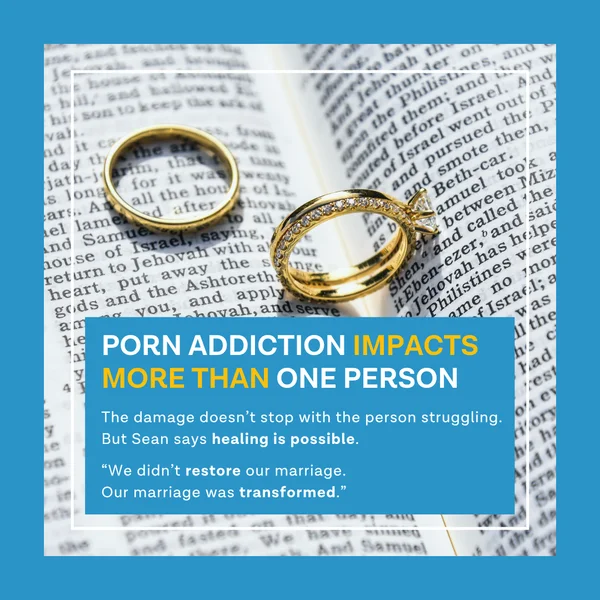
"I don't use the word 'restored.' I say our marriage was transformed. Because I was in addiction the day I met my wife. We don't want to restore what was fake. We want transformation into what God intended it to be."
Transformation is possible, but it requires commitment from both spouses, individual and group work, and a willingness to accept that the process is long. Sean speaks from experience: his own marriage went through it.
Inner Child Therapy: A Key to Understanding Why You Do What You Do
One of the most significant tools in Sean’s clinical practice is the Inner Child Model, developed by Dr. Eddie Capparucci. Sean describes it as the framework he wishes he’d had at the very beginning of his own recovery.
Capparucci’s central premise is that 80% of recovery lies in understanding the why behind the behavior. His model identifies twelve archetypal childhood experiences — the bored child, the stressed child, the unwanted child, the high-anxiety child, among others. As a man works through them, he begins to connect present triggers to formative childhood experiences stored in the limbic system.
"The limbic system forgets nothing," Sean explains. "It remembers everything, even when you're consciously unaware of it. A man can be reacting to something that happened when he was eight years old and have no idea that's what is driving him."
The process involves learning to recognize what Capparucci calls Common Emotional Triggers (CETs) — the situations, environments, and relational interactions that activate that inner child response. From there, a man builds emotional regulation skills: slowing the reaction, separating what he feels from what is real, and learning to “reparent” that child with the perspective of the adult he has become.
"Over time, you are able to say to yourself: I've got this now. I'm an adult. I'm a man. I don't need to react the way I did when I was eight."
Integrating Faith and Clinical Care — Why Both Matter
Sean’s approach is deliberately integrated: biblical in foundation, clinically informed in method. One of his primary resources is Pure Desire Ministries, founded by Pastor Ted Roberts, which he describes as the preeminent Christian sexual addiction recovery ministry in the space. Every tool Pure Desire produces is both Scripturally grounded and clinically supported.
"All truth is God's truth," Sean says. "There are strict Biblical approaches that say Scripture is fully sufficient for counseling. I don't believe that. I believe the biblically based and the clinically informed methods I use are fully compatible with the Bible, but it's different from simply prescribing Scripture to someone."
Practical recovery tools — escape plans, relapse analysis, the three-circle exercise — are part of the work. They cannot be lifted directly from a Bible verse, but their value is entirely consistent with biblical principles. The integration is not a compromise. It is a fuller picture.
What Sean Would Say to the Man Who Is Struggling Right Now
If you are in the middle of this — whether you’ve been caught, whether you’ve been trying to quit for years, whether you’ve convinced yourself it isn’t really a problem — Sean has a clear message:
"You are absolutely not alone. There are communities and people like me waiting and willing to help. You just have to get over the pride and the isolation and take the first step. Healing is entirely possible — if you do the work."
The first step does not have to be public or dramatic. The Ever Accountable app offers a private, low-barrier entry point — a way to begin accountability and honesty about a porn addiction without announcing it to the world. From there, the door opens to deeper community, counseling, and real change.
Connect with Sean Brennan
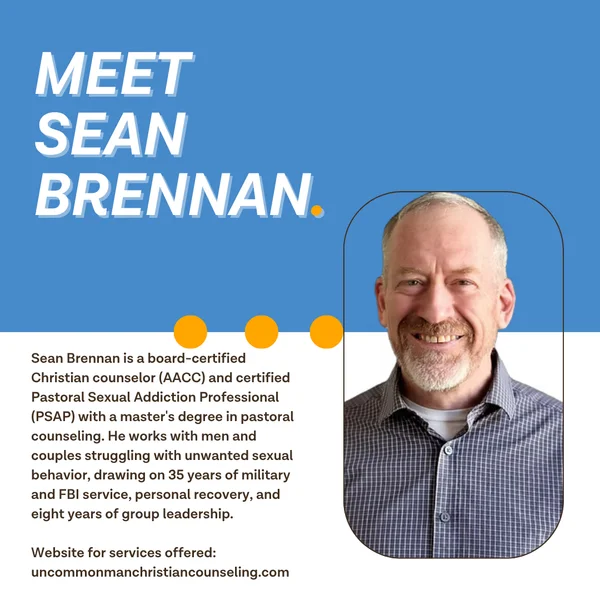
Sean Brennan is a board-certified Christian counselor (AACC) and certified Pastoral Sexual Addiction Professional (PSAP) with a master’s degree in pastoral counseling. He works with men and couples struggling with unwanted sexual behavior, drawing on 35 years of military and FBI service, personal recovery, and eight years of group leadership.
He offers free initial consultations and works with men, with a special focus on veterans, first responders, and military personnel. Sean also helps couples seeking help healing from damage associated with unwanted sexual behavior.
Website: uncommonmanchristiancounseling.com